How to water your garden well
A few habits that save water and grow stronger plants.
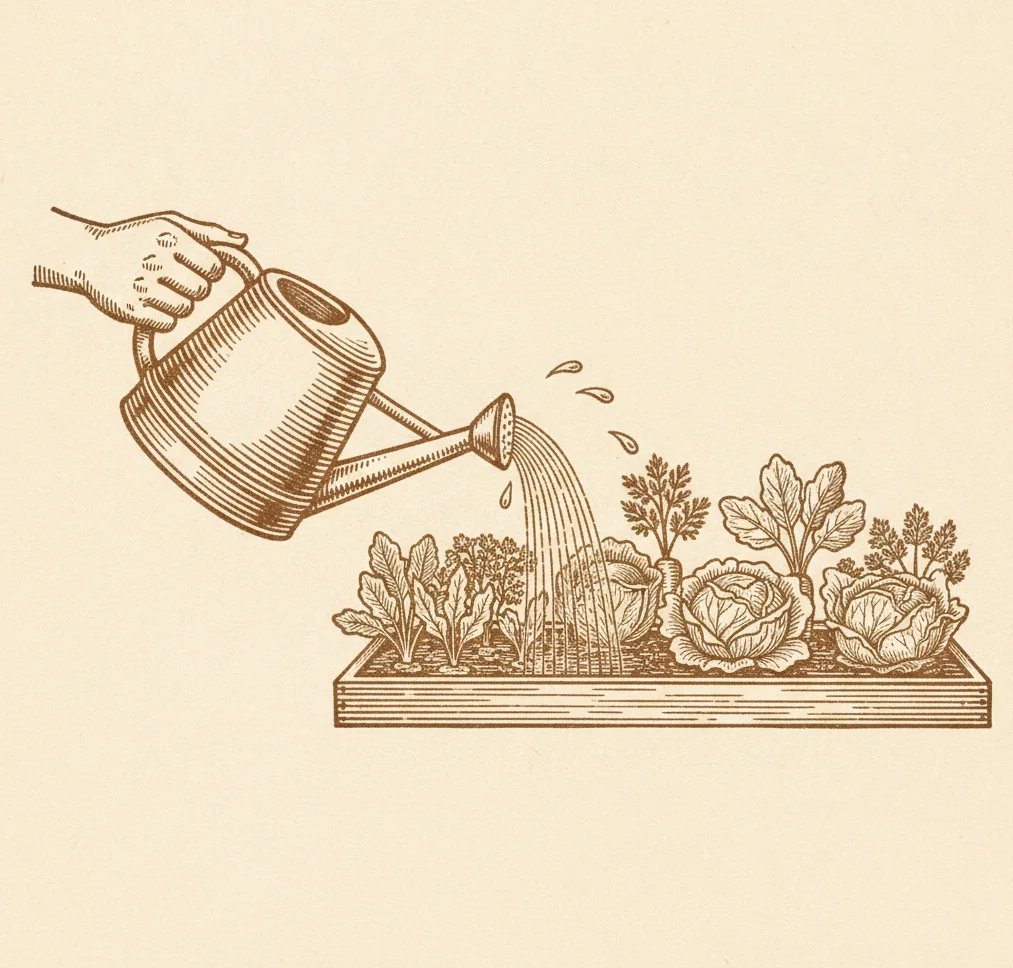
1. Water deeply, less often
Soak the soil so water reaches the roots, then leave it until the top few centimetres dry out. A long drink every few days draws roots down to find moisture; a daily splash keeps them shallow and thirsty.
2. At the base, not over the leaves
Aim the water at the soil around each plant. Wetting the foliage loses water to evaporation and invites mildew and blackspot. A can with the rose taken off, or a slow hose at the base, beats overhead sprinkling.
3. Early or late on hot days
In warm, dry weather, water in the early morning or the evening. Watering at midday loses much of it to the sun before it can soak in.
4. Mulch to hold what you give
A few centimetres of compost, bark or grass clippings over damp soil slows evaporation, so you water less often. Keep the mulch off plant stems.
5. Pots and seedlings need more
Containers dry out fast and have nowhere to draw from, so in summer they may need water daily. Seedlings have shallow roots and must not dry out. Established borders, by contrast, cope with far less than people think.
6. Check before you water
Push a finger into the soil to a knuckle deep. If it is damp down there, hold off. The surface dries first and makes a bed look thirstier than it is. (That gap is exactly what this app is for.)
7. Save rain where you can
A water butt on a downpipe gives you free, soft rainwater, which plants prefer to tap water. Even a small one fills surprisingly fast in a UK shower.
Growing vegetables? Mr Nodiggity has a longer guide on how much a bed actually needs each week, and how to turn a rainfall figure into litres.
Check if your garden needs it today